Demo

Hi, Shannon McMaster here. This is a blog from a time when I was pursuing a certain goal, and thought that using a pen name was a good idea. It was not a *bad* idea, but it proved to be a lot of effort for me, so I decided on a different approach. I'm not going to transfer this stuff to my personal site, though. Not now anyway. Check it: https://grumbleflap.shannonmcmaster.com
Thursday, May 9, 2024

Tuesday, May 10, 2016
Strolling to Meet my Wife
There was this one day when I was getting ready to graduate from college. I attended Vermont College, in Montpelier. Montpelier is, as you might expect, in Vermont, and I live in West Michigan. So I was a long way from home, and my wife and parents were driving in for the event. I was out for a stroll with one of my fellow graduates because, being a pretty informal school, there was not a lot of actual “getting ready” necessary in advance of the actual ceremony.
We were walking along, heading from the library back to the dorms. We were chatting about this and that, and I said, "and there's my wife walking up the sidewalk." She and I started running toward each other, and we hugged and smooched. I asked her how it was going.
She said, "we got into town about five minutes ago. Your dad stopped at the visitor center, and asked the woman there how he could find his son. She told him to go to the top of the hill, and there you were."
That's the stuff in how life works at its best.
Monday, January 11, 2016
Top 23 Collective Nouns that Sound Vaguely Naughty
Without further ado:
- Fluffernutter of spotted-tail quoll
- Bilge of hippos
- Knocker of ostriches
- Rise of woodcocks
- Sack of badgers
- Cant of house-cats
- Boink of bison
- Dangle of bats
- Prom of octopuses
- Violaceous of helmeted guinea fowl
- Valve oil of cattle
- Bogart of hogs
- Picking of aardvarks
- Cannonade of turkeys
- Contentment of boobies
- Scromping of waterbucks
- Writhing of Coqui francolins
- Busting of bulls
- Rack of knob-nosed geese
- Suck of jellyfish
- Hose of thrashers
- Rosette of palm squirrels
- Sham of mynahs
Friday, January 1, 2016
Monty Python & the "Holy Cow, Please Shut-up Already!"

No. That's not true.
Once upon a time the possibility that having every single Monty Python bit ever memorized was anything less than desirable would never have occurred to me.
Well. It would have occurred to me if someone had pointed it out, and if that person had had any credibility. And had a good argument. Like Terry Jones. Maybe.
Having large swathes of Monty Python ready to unleash at will was self-evidently desirable. It was a way to vet new acquaintances, and not just to test them for that narrow suitability. Since Monty Python's Flying Circus (and everything else Monty Python) wasn't American network TV, knowledge of the program and its contents provided me with a way to gauge the whole person quickly: this person clearly gave a chunk of time over to watching PBS, so I will make a string of assumptions about their biases, intelligence, and taste in happy clouds and bon appetit.
This worked pretty well, actually. I have several close friends who, having survived the sorting as strangers in my teens and twenties, are important parts of my life now. Of course, I survived their sorting, too.
So Monty Python bits were intrinsically amusing, handy for breaking the ice, and had utility as a sorting mechanism. Not all is well with this system, however. As much as this knowledge unites and binds, it also excludes and repels. Not all of my friends care much about Monty Python. That's OK. I don't care much about baseball. Some of these people hinted that maybe relying so much on this trivia wasn't always such a good idea. I think they might have. Whoever they were.
Over time, even with the Monty Python crowd, the number and length of Monty Python bits peppering everyday conversation declined to almost nothing. There are still, and frequently, very quick turns of phrase from Monty Python. References to the joke at hand, or a similar joke, or to a personality type parodied in some Monty Python bit or other. These are a shorthand, or even idiomatic. They are almost verbal tics, but every long-term relationship develops this sort of thing, and even with the Monty Python crowd these are only a small part of the shorthand.
As time passed it became a game to become aware of when the Monty Python tic would express itself. A variant of the game is to be aware of Monty Python bits going on around you, but to let them flow past you rather than compel you to recitations, outbursts of non sequitur, and departures by silly walks. Monty Python bits are like The Force: they surround us, penetrate us, and bind us together; they control our actions, but they also obey our commands.
The image up top has lately been working its way around social media. I knew it, but I didn't know it. I had to reach deep to fully contexualize it. I had to let it go, and feel it come back. I felt some sorrow that the bit didn't leap, fully realized, into my consciousness. Then I felt pretty good, like mature and all, that it wasn't so important to me that it ran like a well-worn VHS in my mind.
Then I thought: hey! I get to rediscover Monty Python! I wonder if my son will enjoy it, and if it will become one of his sorting mechanisms like Goat Simulator is.
Over time, even with the Monty Python crowd, the number and length of Monty Python bits peppering everyday conversation declined to almost nothing. There are still, and frequently, very quick turns of phrase from Monty Python. References to the joke at hand, or a similar joke, or to a personality type parodied in some Monty Python bit or other. These are a shorthand, or even idiomatic. They are almost verbal tics, but every long-term relationship develops this sort of thing, and even with the Monty Python crowd these are only a small part of the shorthand.
As time passed it became a game to become aware of when the Monty Python tic would express itself. A variant of the game is to be aware of Monty Python bits going on around you, but to let them flow past you rather than compel you to recitations, outbursts of non sequitur, and departures by silly walks. Monty Python bits are like The Force: they surround us, penetrate us, and bind us together; they control our actions, but they also obey our commands.
The image up top has lately been working its way around social media. I knew it, but I didn't know it. I had to reach deep to fully contexualize it. I had to let it go, and feel it come back. I felt some sorrow that the bit didn't leap, fully realized, into my consciousness. Then I felt pretty good, like mature and all, that it wasn't so important to me that it ran like a well-worn VHS in my mind.
Then I thought: hey! I get to rediscover Monty Python! I wonder if my son will enjoy it, and if it will become one of his sorting mechanisms like Goat Simulator is.
Sunday, December 6, 2015
Luke Skywalker Is No Jedi. Why Should He Be?
For years (YEARS, I TELL YOU!), I bought into the idea that Luke Skywalker is a Jedi. Like his father was. After all, that's the name of that movie, right? And he said as much, to any one who would listen.

And now there's a fresh movie coming out, and Luke has been ALL OVER the ad campaign. It's been all about how Luke is Jedi-ing up the galaxy! I mean, whoa! All that Luke Jedi stuff has been impossible to miss. My children have been Happy Mealing Jedi Luke toys for weeks!
No.
Of course not.
Luke has been notably absent. So, like any good fanboy, I've been wondering about this, and--like any good fanboy--have come up with my own headcanon. I have changed my mind about Luke's post Jedi career.
 I don't know what J.J. Abrams has up his sleeve concerning what Luke has been up to since the end of Return of the Jedi, but I'm pretty sure that my speculation lines up with his plan just this far: Luke Skywalker is not now, and never has been, a Jedi.
The Jedi who returned in that movie is Darth Vader, who was redeemed, and reclaimed his Jedi standing.
I think Luke claiming the Jedi mantle was youthful exuberance related to being special, I mean really, really special, getting some amazing training, hanging with those powerful old men Ben and Yoda, and being swept along in some seriously difficult and exciting times. But, once things calmed down a bit, he had some time to think about things and realized that, no, he is not a Jedi.
Why would he want to be? The Jedi have a boatload to answer for. The Skywalker family has large and legitimate reason to not want to be a part of that particular club. On a less personal note, the Jedi pretty much misread things for decades in the lead up to the Clone Wars. Not just the politics, which is a problem, but understandable. I mean, honestly, politics? But the Jedi Order misread what was going on with The Force. That's their thing, man. And, in misreading that, they managed to end the very civilization they existed to safeguard.
So Luke is going to stand up and say, "Hey! Those people who reacted badly to every challenge put to them for years, and then almost all died--except for two of them who hid out for twenty years and one who was the right fist of the tyrant? Remember them? I'm the new one!"
No.
Luke is going to stop running around telling people he's a Jedi. Again, I can't guess what Abrams is going to say Luke has been up to. But if it were up to me, Luke has been going around the galaxy incognito. Sometimes taking on hard missions of cleaning up lingering Imperial problems. Sometimes Lone Rangering it (or Man With No Naming it) for people and small communities in need. Finding Force sensitive people or families, and providing a nudge. What kind of nudge? I hope the kind that makes for more do-gooders.
But not more Jedi.
Additionally, Luke--as a formal matter--cannot be Jedi. There hasn't been a Jedi Order in decades. There's no academy. There's no padawan/master regimen. There's no Jedi Council to bestow the title. You can meaningfully be The Lone Ranger if there are other Rangers who are part of a structure--you're defining your mission in relation to a structure that exists outside of you. If there are no other Rangers, you're just a vigilante. You can't be a Lone Jedi if there are no other Jedi. Without a Jedi Order, there's no meaningful mission for a Force sensitive to undertake as a Jedi. Without the Jedi Order, you're just someone with an ancient weapon and a hokey religion repping civilization in a frayed world. Which is a heroic mission, just ask Hercules, but does not make you a Jedi.
Arguably, the proper name for "Lone Jedi" is "Sith." No, not really. The Sith fought against the Jedi and the Jedi against the Sith, but they didn't really define themselves against the other so much as get in each other's way while working at cross-purposes. It was really sort of a farce.
But back to Luke. Not a Jedi. Never was. Wouldn't want to be, and could never be in any event. But a civilizing Force? That's something Luke Skywalker could be.
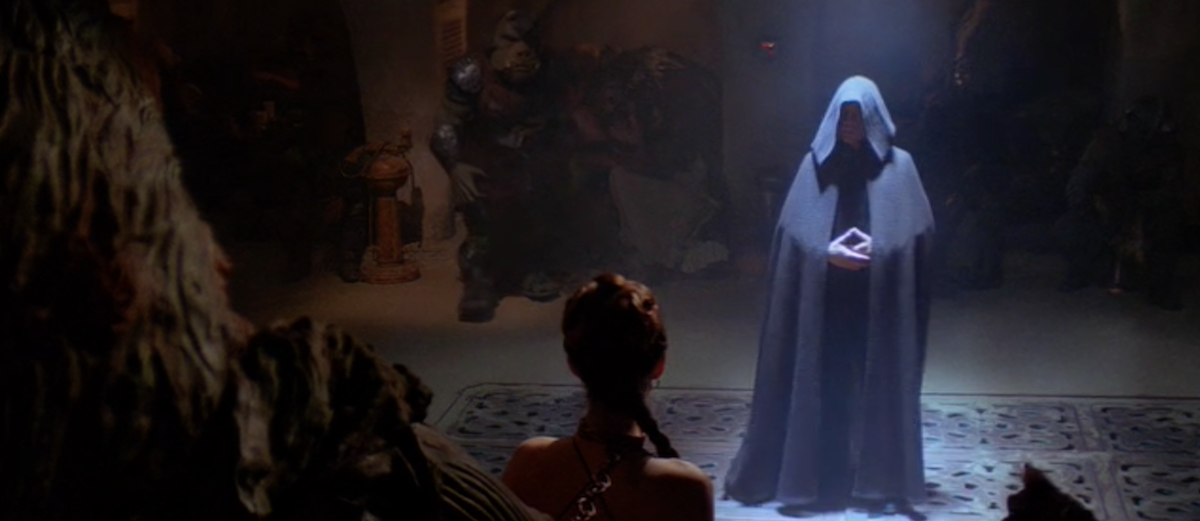
And now there's a fresh movie coming out, and Luke has been ALL OVER the ad campaign. It's been all about how Luke is Jedi-ing up the galaxy! I mean, whoa! All that Luke Jedi stuff has been impossible to miss. My children have been Happy Mealing Jedi Luke toys for weeks!
No.
Of course not.
Luke has been notably absent. So, like any good fanboy, I've been wondering about this, and--like any good fanboy--have come up with my own headcanon. I have changed my mind about Luke's post Jedi career.
 I don't know what J.J. Abrams has up his sleeve concerning what Luke has been up to since the end of Return of the Jedi, but I'm pretty sure that my speculation lines up with his plan just this far: Luke Skywalker is not now, and never has been, a Jedi.
The Jedi who returned in that movie is Darth Vader, who was redeemed, and reclaimed his Jedi standing.
I think Luke claiming the Jedi mantle was youthful exuberance related to being special, I mean really, really special, getting some amazing training, hanging with those powerful old men Ben and Yoda, and being swept along in some seriously difficult and exciting times. But, once things calmed down a bit, he had some time to think about things and realized that, no, he is not a Jedi.
Why would he want to be? The Jedi have a boatload to answer for. The Skywalker family has large and legitimate reason to not want to be a part of that particular club. On a less personal note, the Jedi pretty much misread things for decades in the lead up to the Clone Wars. Not just the politics, which is a problem, but understandable. I mean, honestly, politics? But the Jedi Order misread what was going on with The Force. That's their thing, man. And, in misreading that, they managed to end the very civilization they existed to safeguard.
So Luke is going to stand up and say, "Hey! Those people who reacted badly to every challenge put to them for years, and then almost all died--except for two of them who hid out for twenty years and one who was the right fist of the tyrant? Remember them? I'm the new one!"
No.
Luke is going to stop running around telling people he's a Jedi. Again, I can't guess what Abrams is going to say Luke has been up to. But if it were up to me, Luke has been going around the galaxy incognito. Sometimes taking on hard missions of cleaning up lingering Imperial problems. Sometimes Lone Rangering it (or Man With No Naming it) for people and small communities in need. Finding Force sensitive people or families, and providing a nudge. What kind of nudge? I hope the kind that makes for more do-gooders.
But not more Jedi.
Additionally, Luke--as a formal matter--cannot be Jedi. There hasn't been a Jedi Order in decades. There's no academy. There's no padawan/master regimen. There's no Jedi Council to bestow the title. You can meaningfully be The Lone Ranger if there are other Rangers who are part of a structure--you're defining your mission in relation to a structure that exists outside of you. If there are no other Rangers, you're just a vigilante. You can't be a Lone Jedi if there are no other Jedi. Without a Jedi Order, there's no meaningful mission for a Force sensitive to undertake as a Jedi. Without the Jedi Order, you're just someone with an ancient weapon and a hokey religion repping civilization in a frayed world. Which is a heroic mission, just ask Hercules, but does not make you a Jedi.
Arguably, the proper name for "Lone Jedi" is "Sith." No, not really. The Sith fought against the Jedi and the Jedi against the Sith, but they didn't really define themselves against the other so much as get in each other's way while working at cross-purposes. It was really sort of a farce.
But back to Luke. Not a Jedi. Never was. Wouldn't want to be, and could never be in any event. But a civilizing Force? That's something Luke Skywalker could be.
Saturday, December 5, 2015
Bewitched Magical World-building

Last week, I saw about five minutes of an episode, basically one scene. It was enough, however, to make me think this show old enough to straddle the transition from black & white to color TV had some serious world-building chops.
The gist of the episode was what to do about Samantha and Darrin's daughter (Tabitha), a late toddler at the time, and her education. Three of Samantha's aunts, and her mother, have gotten together and decided that Tabitha would attend a prestigious witch school run by one of the aunts. Samantha and Darrin don't like it, one of the aunts join them, and they call on Samatha's father to intervene. Which he does.
There are seven active participants in this scene, plus a cameo by Tabitha as she is magically summoned into the arms of her grandmother and magically returned to her room by her grandfather. There is also a pair of brief cut-aways as Samantha's father briefly sends the meddling witches to the top of Mt. Everest for a moment to think about what they've done. At the end, Tabitha will go to mortal school, the meddling witches go back to where ever they live most of their lives, and Samantha's father departs in flamboyant style with the good aunt.
Simple scene, but chock full of world-building.
- Samantha and her mother have a complex relationship, made more so by her marriage to Darrin
- There is a network of witch schools, implied by the existence of one, and the need (perceived by some) to decide which one Tabitha will attend
- Tabitha is special, being the first of her generation (leading to the unasked questions: how many witch children are there, and how does witch school work?)
- Witches can cast spells affecting the actions of others, but not always their wills (the meddling witches cast a spell which keep Samantha, Darrin, and the good aunt from walking, and another which makes their talk sound like bird jabber)
- Witches cannot undo the spell effects of other witches, so Samantha's father has to prevail upon the meddling witches to change their minds, and to undo their spells
- Samantha's mother and father do not get along (are they divorced? were they ever married? are these meaningful categories? doesn't matter--what matters is that they have history and it is an independent dynamic
- Indeed, Samantha's father has pre-existing relationships with each of the witches in the scene, and they are not all the same--history matters in this scene
What this scene demonstrates that a few rules, and a bit of character history, allow even a silly mid-century sit-com was able to build a world with interesting characters, compelling problems, and resolutions to problems unique to the story being told.
Not bad for a show which also managed to be funny, and to give viewers fun performances from its actors.
Thursday, November 26, 2015
I'm Thankful for Lots of Things
It's a good day for pausing, for looking around, and being quietly grateful for things. Things, conditions, actions. Oneself. Others.
It's a good day to share those items of gratitude, too. For taking a step out of our mundane lives. Maybe connecting this with that.
I'm grateful my mundane life supports my Phil Strobe habit. That the people, jobs, technology, and education I've been given, earned, and lucked into have teamed up to allow me to do something in my life that I enjoy deeply.
It's a pretty self-directed thing to be feel grateful for. I'm grateful for you, my readers like a handful of marbles. I'm grateful that you have leisure enough to give me some of your time. Life is a tough game. Lots of people have it astronomically tougher than I have. I suspect many of my readers have it tougher than I have it, and that many put in long days or nights helping people who have it tougher still. I'm grateful you feel my work is a good, useful, diversion.
 Still sounds pretty self-serving, I think. But gratitude is a pretty self-directed feeling. It gives you a moment to place yourself in conscious relation with the world around you. Gratitude is a challenging feeling, being about the self, but also demanding engagement with the rest of the world with a silent look asking if you're right with things. Like a Aunt whose love for you often takes the form of a silent look.
Be grateful for those Aunts.
It's a good day to share those items of gratitude, too. For taking a step out of our mundane lives. Maybe connecting this with that.
I'm grateful my mundane life supports my Phil Strobe habit. That the people, jobs, technology, and education I've been given, earned, and lucked into have teamed up to allow me to do something in my life that I enjoy deeply.
It's a pretty self-directed thing to be feel grateful for. I'm grateful for you, my readers like a handful of marbles. I'm grateful that you have leisure enough to give me some of your time. Life is a tough game. Lots of people have it astronomically tougher than I have. I suspect many of my readers have it tougher than I have it, and that many put in long days or nights helping people who have it tougher still. I'm grateful you feel my work is a good, useful, diversion.
 Still sounds pretty self-serving, I think. But gratitude is a pretty self-directed feeling. It gives you a moment to place yourself in conscious relation with the world around you. Gratitude is a challenging feeling, being about the self, but also demanding engagement with the rest of the world with a silent look asking if you're right with things. Like a Aunt whose love for you often takes the form of a silent look.
Be grateful for those Aunts.
Subscribe to:
Comments (Atom)